

Engineering of Cellulolytic Lactic Acid Bacteria
- Post by: Ana Mitrović
- 31.October, 2026
- Comments off
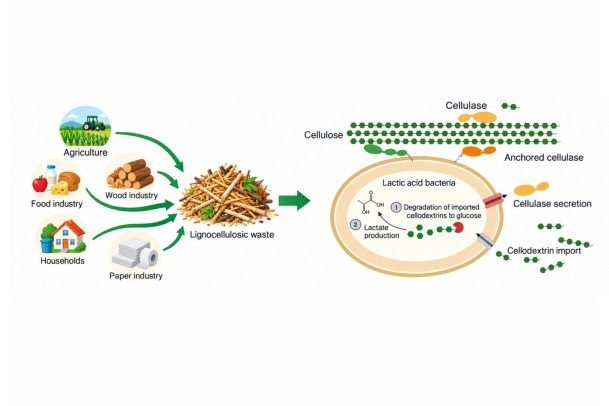
Plant-waste cellulose is a renewable carbon source that lactic acid bacteria cannot naturally utilize. Within the ERA-NET Cell4Chem project, researchers from Department of Biotechnology at the Jožef Stefan Institute (IJS), in collaboration with researchers from Laboratoire de Chimie Bactérienne (LCB) at CNRS institute in Marseille and Aix-Marseille University, engineered Lactococcus cremoris to degrade cellulose and metabolize the released sugars. The work, to which Petra Štravs and Prof. Dr. Aleš Berlec contributed, has been published in three research articles.
Development of cellulose-degrading lactic acid bacterium Lactococcus cremoris by genetic engineering, published in Bioresource Technology
Researchers engineered L. cremoris to produce cellulases Cel5H, Cel9A, or Cel5I and either secrete the enzymes or display them on the cell surface. Several strains grew on amorphous cellulose, demonstrating for the first time that engineered L. cremoris can independently degrade and utilize insoluble cellulosic substrate.
Co-expression of holin gene improves heterologous cellulase secretion and surface display by lactic acid bacterium Lactococcus cremoris, published in the Journal of Biological Engineering
Limited cellulase transport across the L. cremoris cell envelope was addressed using a recombinant prophage-derived holin, which increased membrane permeabilization and therefore enhanced cellulase secretion and surface display in L. cremoris. This strategy could also be employed for general improvement of heterologous protein export in lactic acid bacteria.
Engineering Lactococcus cremoris strains co-expressing two cellulase genes for growth on cellulose, published in Frontiers in Bioengineering and Biotechnology
In the third study enhanced cellulose degradation was achieved by engineering L. cremoris to produce two cellulases simultaneously. Expressing each enzyme from a separate genetic cassette enabled their production levels to be regulated independently, optimized for synergistic activity and therefore their total activity.