

Fungal Lectin as a Potential Selective Bioinsecticide
- Post by: Jure Pohleven
- 17.March, 2026
- Comments off
In the study led by dr. Jerica Sabotič researchers from the Department of Biotechnology and the Department of Biochemistry and Molecular and Structural Biology at the Jožef Stefan Institute, in collaboration with the Agricultural Institute of Slovenia, and the Biotechnical Faculty, University of Ljubljana, and international partners, have published a new article in the Journal of Agricultural and Food Chemistry entitled:
“The Entomotoxic Fungal Lectin Marasmius oreades Agglutinin Disrupts the Midgut Epithelium of Colorado Potato Beetle Larvae.”
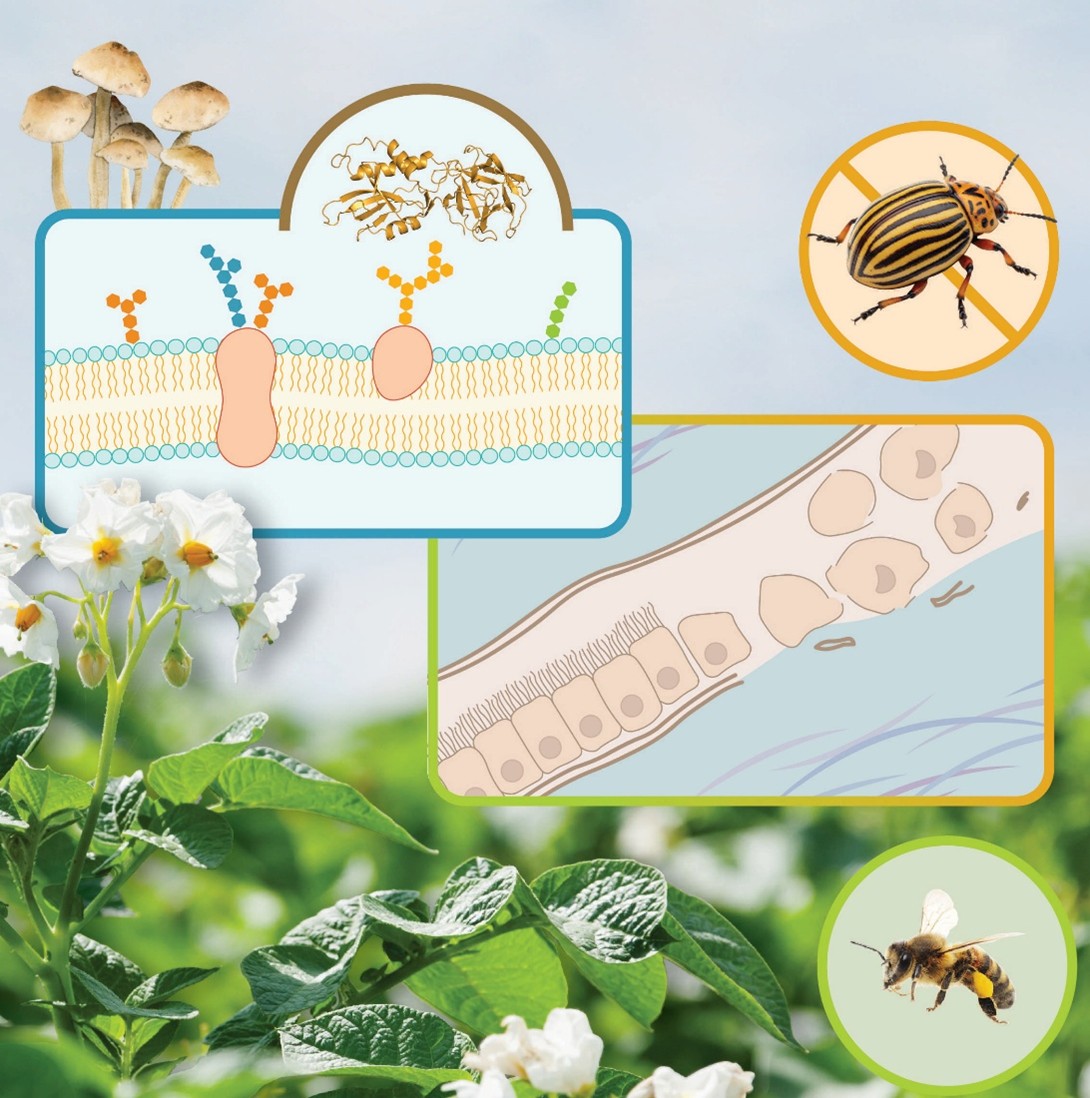
The study investigates the insecticidal activity of fungal lectins and identifies Marasmius oreades agglutinin (MOA) as highly effective against larvae of the Colorado potato beetle, a major agricultural pest. The authors show that MOA binds to glycoproteins in the larval midgut, causing disruption of epithelial organization and loss of gut integrity. Both functional domains of the lectin were found to be essential for its activity. Importantly, toxicity assays revealed no acute lethal effects on adult honeybees, suggesting a degree of selectivity toward the target pest. The results contribute to the development of environmentally friendly strategies for pest control.
The work was part of the FunContrAPest project funded by ARIS and NKFIH and represents a highly interdisciplinary effort, combining expertise in molecular biosciences, structural biology, entomology, agriculture, and applied statistics.
Full details are available in the published study: https://pubs.acs.org/doi/10.1021/acs.jafc.5c16986